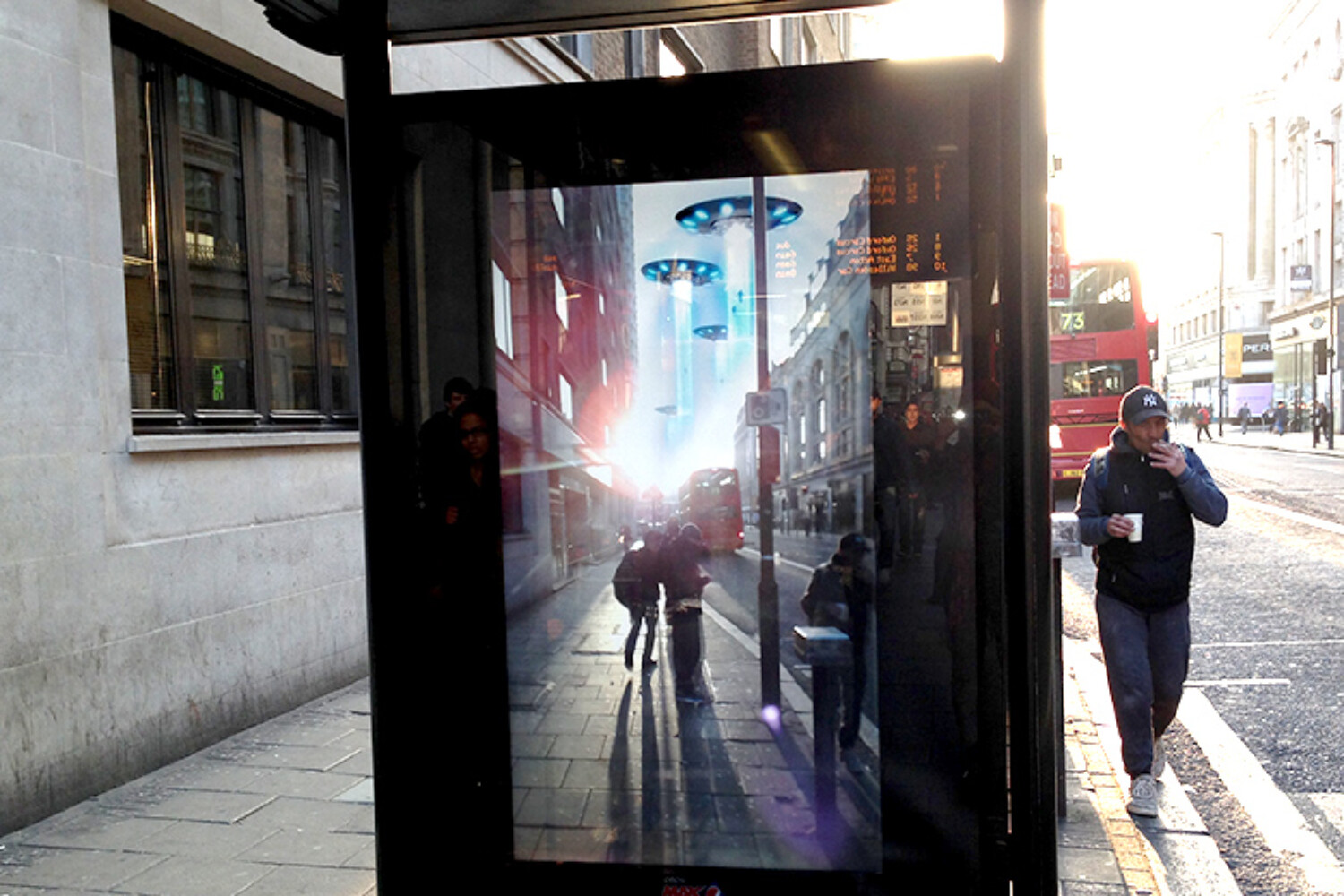
I read with great interest the recent news of the how the high street and shopping habits of consumers have changed, and what that might say about the way we are living post pandemic. Because of the space we work in it was intriguing to read the about how experience led retail is flourishing on a high street of closing department stores, shops or bank branches. Obviously, we immediately coupled this with the trends in our own media market, how our clients and agencies have been briefing us, and how we’re delivering on briefs in the real world, we thought we’d share a few guiding principles considering how the Out-of-Home experience space has evolved, and what that might mean for storytellers, advertisers, agencies, brands and consumers alike.
The Evolved Brand Personality
Brands love to be human- having their stories to tell, histories, their own “personalities,” likes, dislikes and relationships. These relationships are always based on memorable experiences that consumers have with a given brand. Think back to brands you picked on your Christmas food shop in December… and think of the relationship you’ve built with those brands over the last 5, 10 or 15 Christmas’. I use Christmas as it’s a highly emotive time, but I guarantee you made purchasing decisions based on these relationships, and the memories they have given you in your own home and at that time of year. We as advertisers are keen to harness and strengthen audience brand relationships through our campaign work, primarily as we know the bond between brands and audiences are proven to become stronger if the brand experience is memorable, rewarding, or in the social age – shareable. Companies look to events to be the personification or humanization of their brands, so delivering on that is fundamental to their success. Most brands have worked very hard on the personality of their brands and agencies need to continue to work hard to deliver it through their storytelling.
Location, Location, Location
Yes, it’s an old adage, but never truer when it comes to activating experiences for active audiences. In order to select locations that might fit a brand, it’s personality and the creative ask, it’s imperative to look at tangible data, research across the OOH market. We’re fortunate to have world class tools in our group that allows us to select the right locations for the right audience at the right time. This allows us to tune the ROI associated to a campaign in the right direction for clients, and provides a value they cannot get from non specialist agencies.
So getting the brand and it’s personality to the right audience becomes essential – we look at this as a sort of dating game between groups of people and brands, and we strive to connect like-minded personalities. This makes the blend of Media Planning and Creative Execution key to the success of an event or experience.
Being Real (again)
Experiential marketing isn’t about just putting products or services out there. It is about creating valuable experiences, tactical rewards or value exchange for time that customers devote to your event. After a few years of concerns around public gatherings, immersive events and fears over ‘super spreading’ we’re finally seeing brands embracing getting their products and services back in the hands of people in the OOH space. We’re certainly seeing more and more brands wanting to ‘think outside’ in the briefs we’re responding to. According to a YouGov study in 2020, 44% of consumers preferred to attend outdoor events. Now, while that was slap bang in COVID times, the trend has indeed continued post COVID as we simply embrace the fact that we can get out and explore after being repeatedly locked down.
- Another trend we’re seeing post COVID is brands adopting a more human-centric approach to designing brand experiences. Perhaps there’s simply digital, tech or device fatigue? We as humans crave the ‘real’ – genuine interactions and emotions that come from physical interaction with something in the real world rather than a somewhat banal soulless interaction with pixels or avatars, or using technology because it’s ‘trending’. Creating experiences that centre around something real is the trend we expect to continue irrespective of the shifting sands of technology.
Technology plays its part though…
That’s not to say there’s not a role for Tech. As we entered the digital age, and more recently the ‘metaversal’ one we’re seeing more brands looking for virtual, digital and in-person events and experiences to be blended, offering experiences and rewards in multiple ways depending on the consumer behavior and entry portal.
- Augmented Reality (AR) and Virtual Reality (VR) technologies make things pretty immersive. These technologies make it easier for people to imagine possibilities and try them safely in simulated environments, and have been utilized in OOH activations in numerous ways over recent years. According to marketing week, most people want to use VR to mimic a real-world experience, to travel somewhere, experience a remote location, event, fantasy or sporting fixture that they otherwise could not get to.
- Edgar Dale’s Cone of Experience study around cognitive psychology in 1969 proved that people will generally remember only 10% of what they read but up to 90% of what they experience… We do wonder if those numbers still stack up in the 2020s for the virtual experiences over physical ones.
- Smart technologies and wearables are becoming more frequently used as a layer in experiential projects. Whether they are used for data tracking, or for activation engagement, it’s clear to see that consumers are embracing their use. This likely comes from the familiarity of the tech employed, EG smart cards, wristbands or mobile devices.
- Of course, the other major role or layer for digital in experiences is social, and how socializing the experience can help audiences become brand and event advocates and spread the message further than the event itself. The use of User Generated Content (UGC) or brand curated UGC is a great way to amplify events and socialize the messages or output from an event.
- One thing is for certain, ‘offline’ live events are never going to go out of fashion in favour of ‘online’ ones. We believe that Digital tech should be employed as a layer on a physical experience OOH, and utilized in ways to make them more unique, memorable or shareable. Consider London’s newest destination event space and it’s immersive screens, space and technology setup The Outernet. A phenomenal space that can be utilized by brands looking for that omnichannel experience centered around a hero location.
- Advocacy and Sustainability
- In the modern business landscape, major brands are expected to have their advocacies and create some social good. This is especially true with brands targeting Millennials and GenZ audiences. This is likely going to put even more pressure on marketers in the future, as they strive to create value, drive positive change and have their campaign message or experience deliver on all of that.
- We’ve long talked about the responsibility we have working in OOH delivering in public spaces and to audience where we’ve not been invited in by an audience. As such we as an industry we must always bear in mind the positive change we stimulate through our activations and the impact we can have on the public and the environment.
- We’ll no doubt continue see more sustainable builds, materials and sampling mechanics used in the years to come as the industry reacts to climate change and the small impacts a change in the way we live and help the world around us. OOH media has been shown to be one of the most environmentally sustainable advertising mediums around, and experiential activations in the space will continue to enhance that if implemented in the right way.